





 01
GPU memory
Model weights, the KV cache and batches all live in VRAM, so its capacity decides which models fit at all.
GPU memory
96 GB
1× RTX PRO 6000 Blackwell Server Edition
70B model in FP8

// Dedicated servers
Dedicated servers
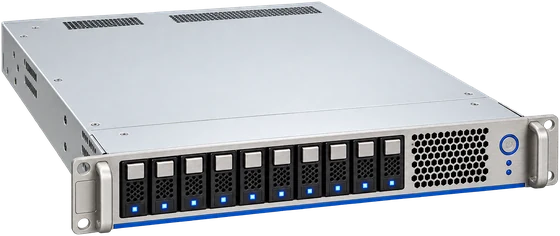
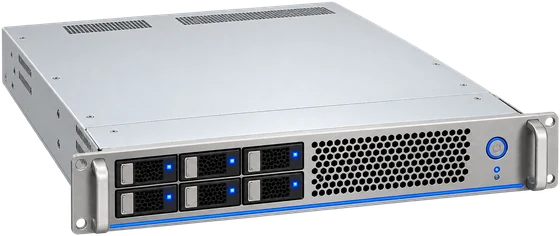
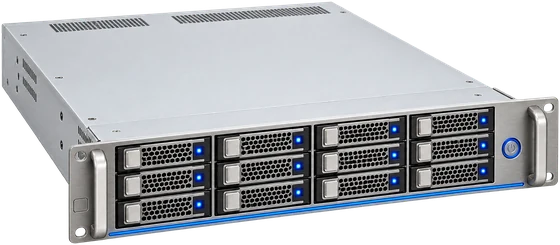
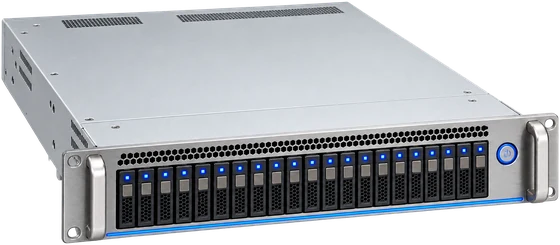
49 configurations on current AMD EPYC and Intel Xeon processors, from a 6-core high-frequency machine to eight-GPU training nodes, all with ECC memory and enterprise NVMe.
All serversFamilies
 FROST
$84/mo
High-frequency
EPYC 4005 at up to 5.7 GHz for game servers, busy websites and CI.
 FJORD
$289/mo
EPYC performance
Single-socket EPYC 9005 with all twelve memory channels populated.
 POLAR
$509/mo
Dual-socket enterprise
Two sockets, up to 384 cores and 3 TB of DDR5 for private clouds and in-memory data.
 PERMAFROST
$119/mo
Storage
Up to 288 TB of CMR disks per chassis, or 123 TB of Gen5 NVMe.
 AURORA
$169/mo
GPU
Dedicated GPUs by the month, from one 24 GB NVIDIA L4 to eight-GPU H200, B200, B300 and AMD MI355X nodes.
 VORTEX
$249/mo
High-bandwidth
5 to 200 Gbps of unmetered bandwidth for streaming and delivery.
// Solutions
Solutions
The right machine depends on what it runs, so start from your workload and we will show the configurations that suit it.
View allWorkloads
 Game servers
Up to 5.7 GHz, 3D V-Cache and UDP-aware DDoS filtering.
 Video streaming
Unmetered ports up to 200 Gbps and hardware AV1 encoding.
AI inference
From one L4 to eight B200 GPUs, billed by the month.
 Storage & backup
Up to 288 TB of CMR disks and ECC memory for ZFS.
 Virtualization
Proxmox and VMware hosts with up to 3 TB of RAM.
 Web hosting
cPanel and Plesk servers for agencies and resellers.
 Databases
Gen5 NVMe and twelve memory channels for low latency.
 CI & build farms
High-clock EPYC cores for faster CI builds.
// Streaming at 100 Gbps
One Vortex origin with unmetered bandwidth feeds the edge caches that serve your viewers.
// Infrastructure
Infrastructure
Two Arctic campuses and two Nordic hubs run on renewable power, and four interconnection hubs next to the main internet exchanges provide 4.8 Tbps of edge capacity.
View allLocations
Platform
Network Transit, peering and latency between sites DDoS protection 3.2 Tbps of always-on mitigation Hardware The exact model of every component Sustainability PUE 1.08, renewable power, heat reuse Services Backup, private network, IPs, management// Seen from the pole
 LLA1
RKV1
OSL1
HEL1
AMS1
FRA1
IAD1
SIN1
Every Nordic site is less than 40 ms from Amsterdam and Frankfurt.
// Solutions / AI inference
Serving a model in production needs GPU memory first and steady throughput second. Aurora servers give you whole GPUs that no other customer shares, from a 24 GB L4 to HGX nodes with 2.3 TB of HBM3e. Rented by the month, they cost far less than on-demand GPU hours for anything that runs around the clock.
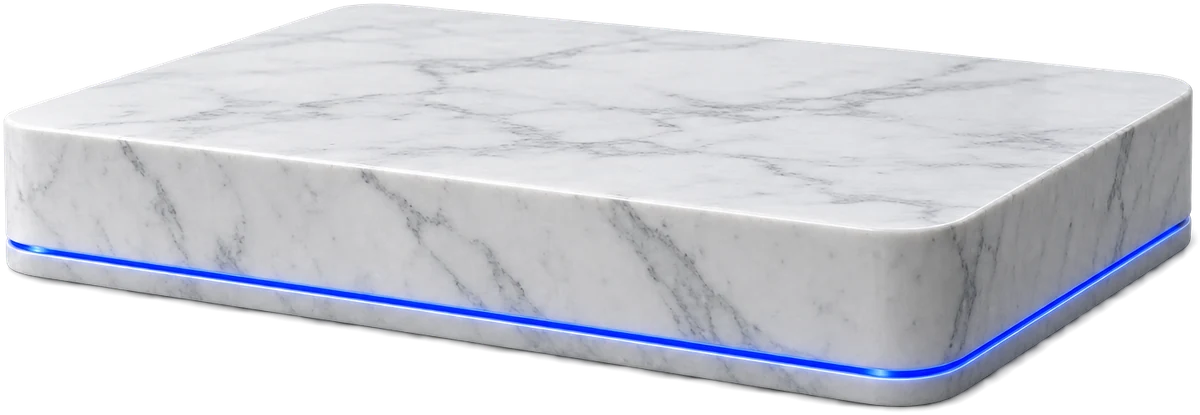
 96 GB VRAM
FP8
NVLink
65.5848° N
01
Model weights, the KV cache and batches all live in VRAM, so its capacity decides which models fit at all.
GPU memory
96 GB
1× RTX PRO 6000 Blackwell Server Edition
70B model in FP8
 02
Local NVMe drives load tens of gigabytes of weights in seconds when you swap or scale models.
Sequential read
14 GB/s
2× 3.84 TB NVMe Gen5 · Micron 9550 PRO
 03
GPU servers draw kilowatts around the clock, and renewable Nordic power keeps that cost low.
Where the power comes from
PUE 1.08
// Reference architecture
The RTX PRO 6000 Blackwell carries 96 GB of GDDR7, enough to serve a 70-billion-parameter model in FP8 with vLLM or TensorRT-LLM.
Eight H200 or B200 GPUs linked by NVLink hold the largest open models in memory, and 400G networking lets you train across several nodes.
A month of a dedicated RTX PRO 6000 costs about as much as 300 on-demand hours on many clouds, and the card is yours for all 730.
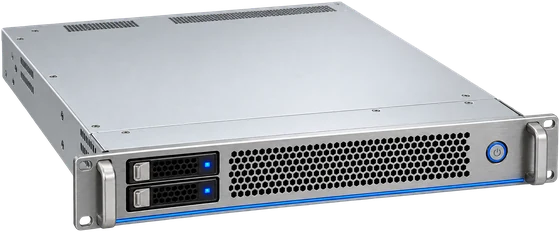
AURORA-L4
AMD EPYC 4465P
$199/mo
22 in stock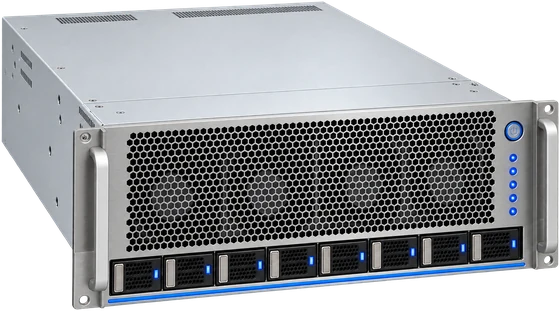
AURORA-PRO6000
AMD EPYC 9135
$699/mo
15 in stock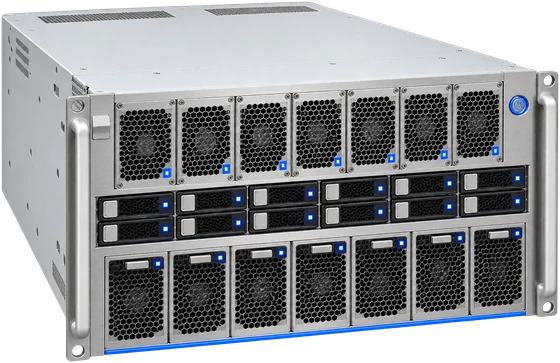
AURORA-8×H200
2× AMD EPYC 9555
$10,900/mo
2 in stock// Questions
Answers about dedicated server delivery, bandwidth, hardware and billing.
Size it · Aurora
Talk to an engineer
Our sales engineers answer within one business hour and can size a configuration with you.
Contact salesAnything that runs on CUDA: vLLM, TensorRT-LLM, SGLang, Ollama, PyTorch, JAX and Triton Inference Server. We can preinstall the driver, CUDA and the container toolkit.
The HGX nodes are built for training, with NVLink and 400G networking, and the multi-GPU RTX PRO 6000 servers handle fine-tuning well.
L4 and RTX PRO 6000 servers are available at six sites, while the HGX H200 and B200 nodes run in Luleå and Reykjavík on renewable power.
// Deploy today